

a complete guide to campfires in the woods
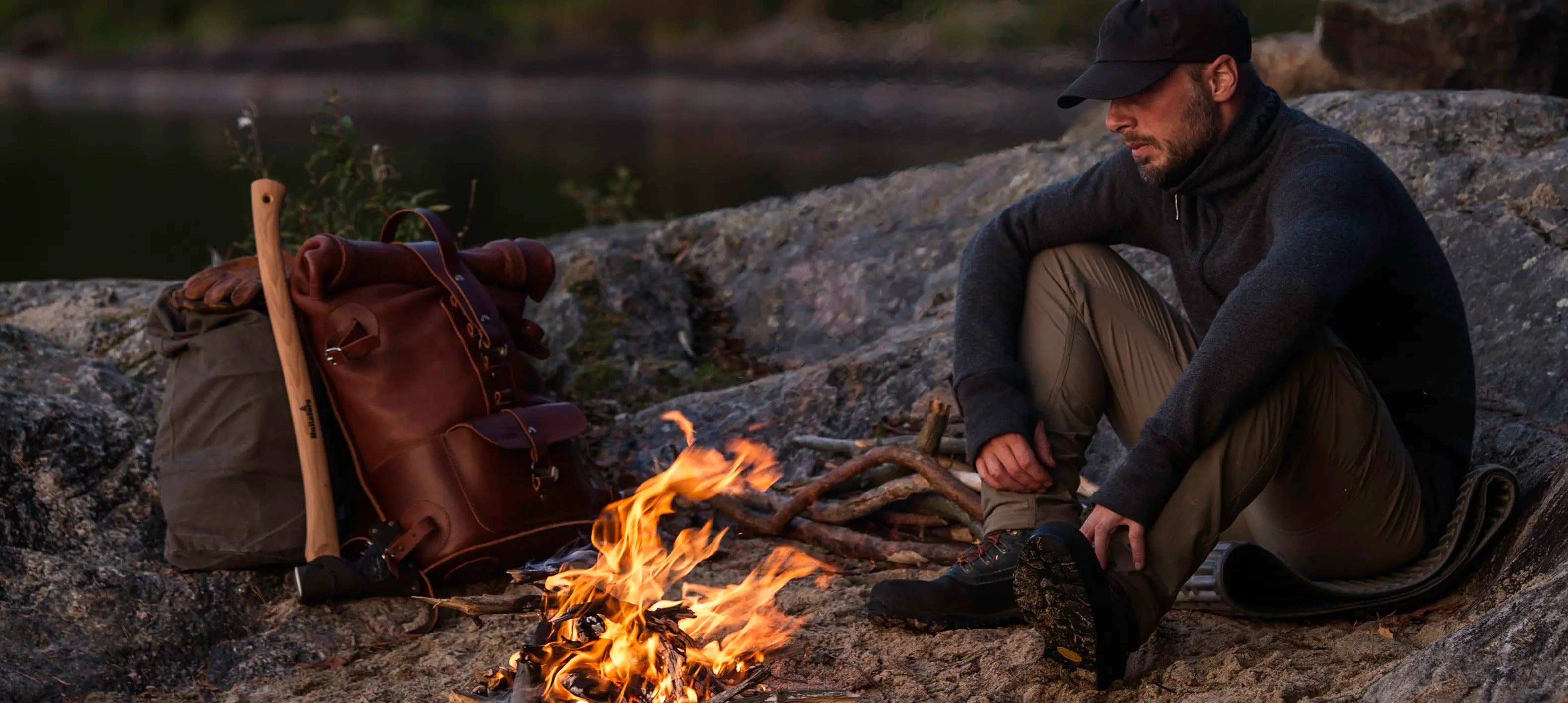
Since ancient times, people have gathered around fire for warmth, food and a sense of togetherness. Knowing how to make a fire in the woods still provides comfort, heat and the ability to cook outdoors – whether you’re on a short walk in the countryside or a longer expedition.
In this guide, you’ll learn how to start a fire safely and reliably: from preparation and fire safety to different fire lays, materials and equipment. You’ll also find practical tips for cooking over an open campfire.
WHERE CAN YOU MAKE A FIRE IN THE WOODS?
SAFETY FIRST
Always start by checking local fire regulations. Fire bans must be respected at all times. Even a small campfire can spread quickly, especially in dry or windy conditions.
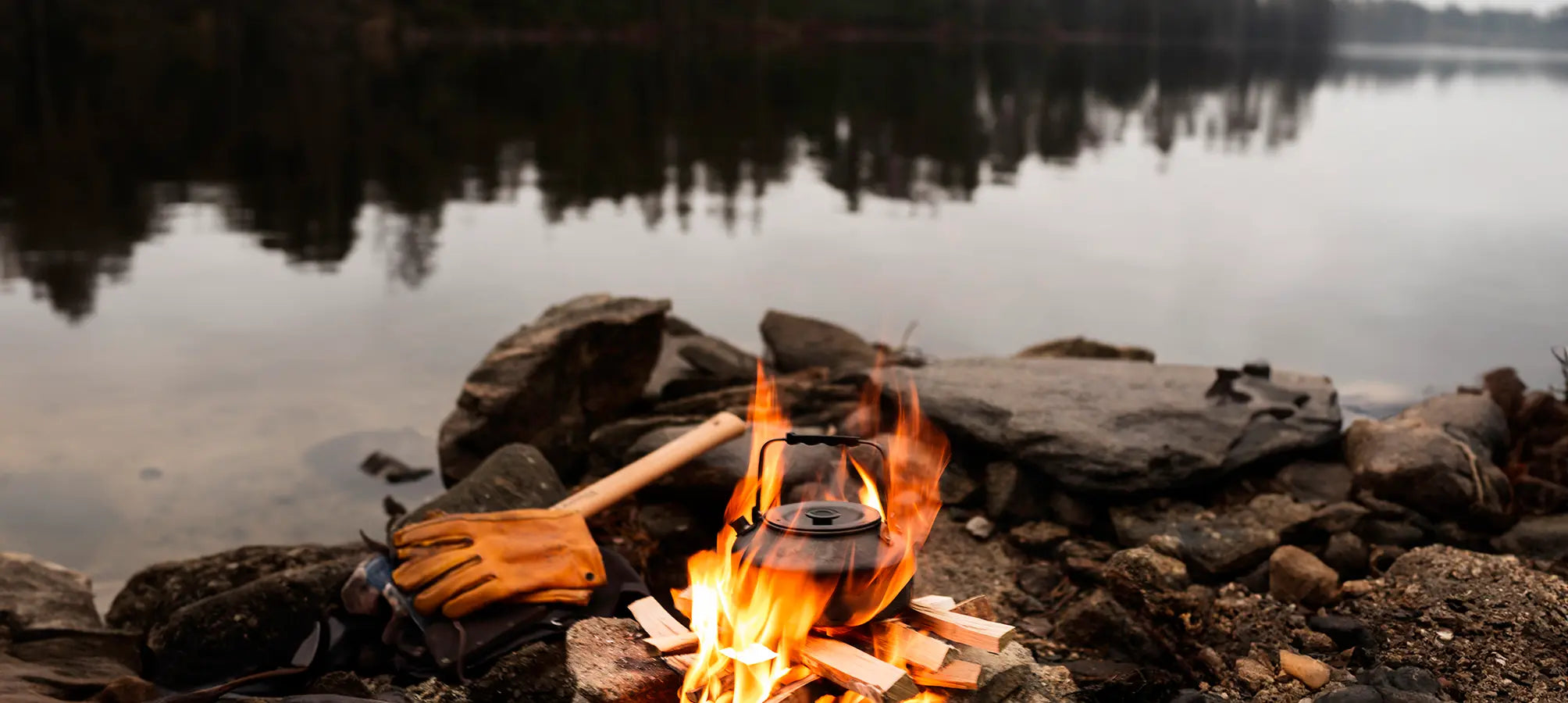
When fires are allowed, choose your spot carefully. Use an existing fire ring if possible. If not, light your fire on gravel, sand or bare mineral soil, ideally close to water. Avoid rock slabs, as they can crack from heat, and never build a fire on peat, roots, moss or dry grass. Keep your campfire well away from tents and equipment.
KAMOTO OPENFIRE PIT
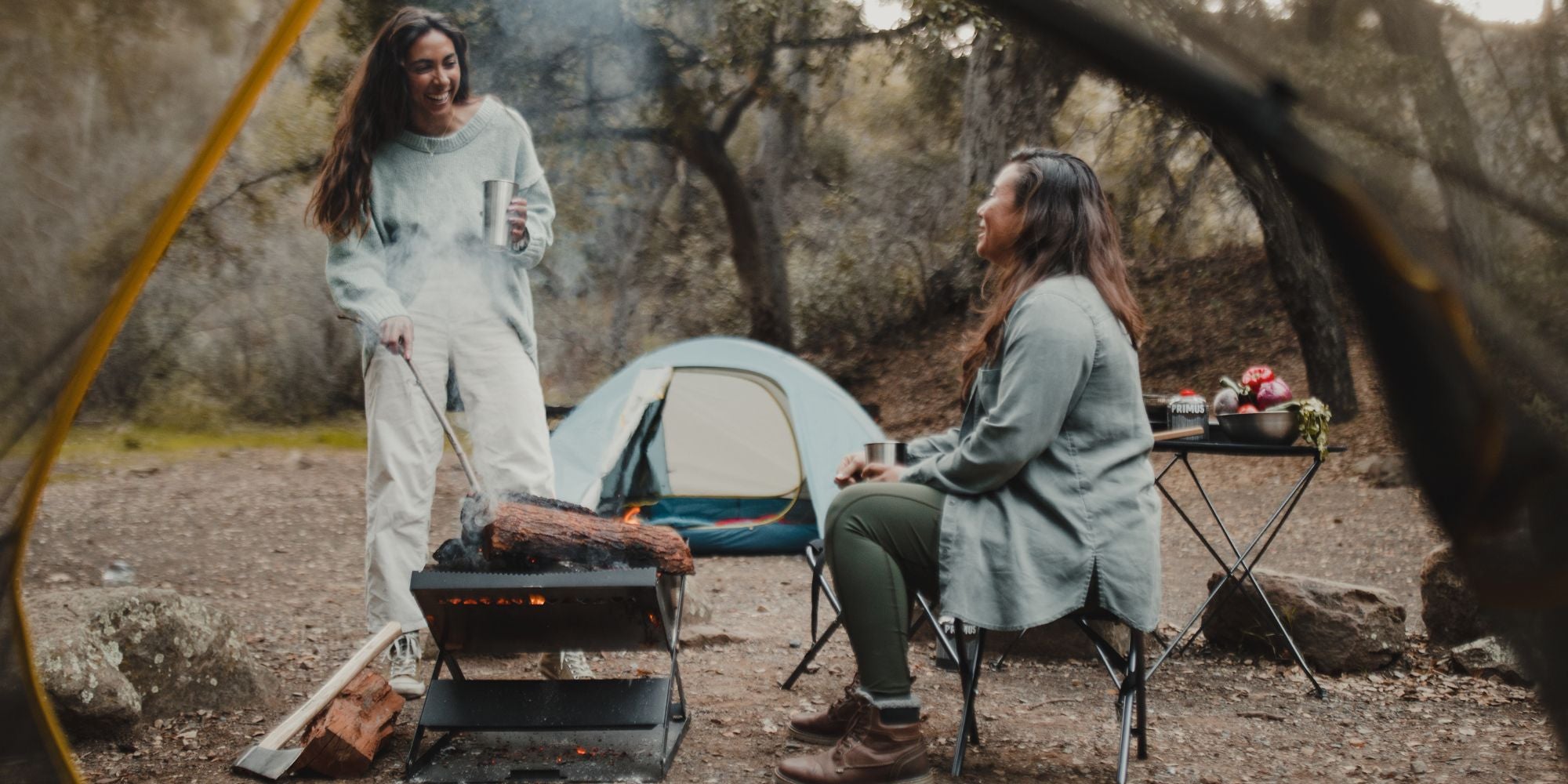
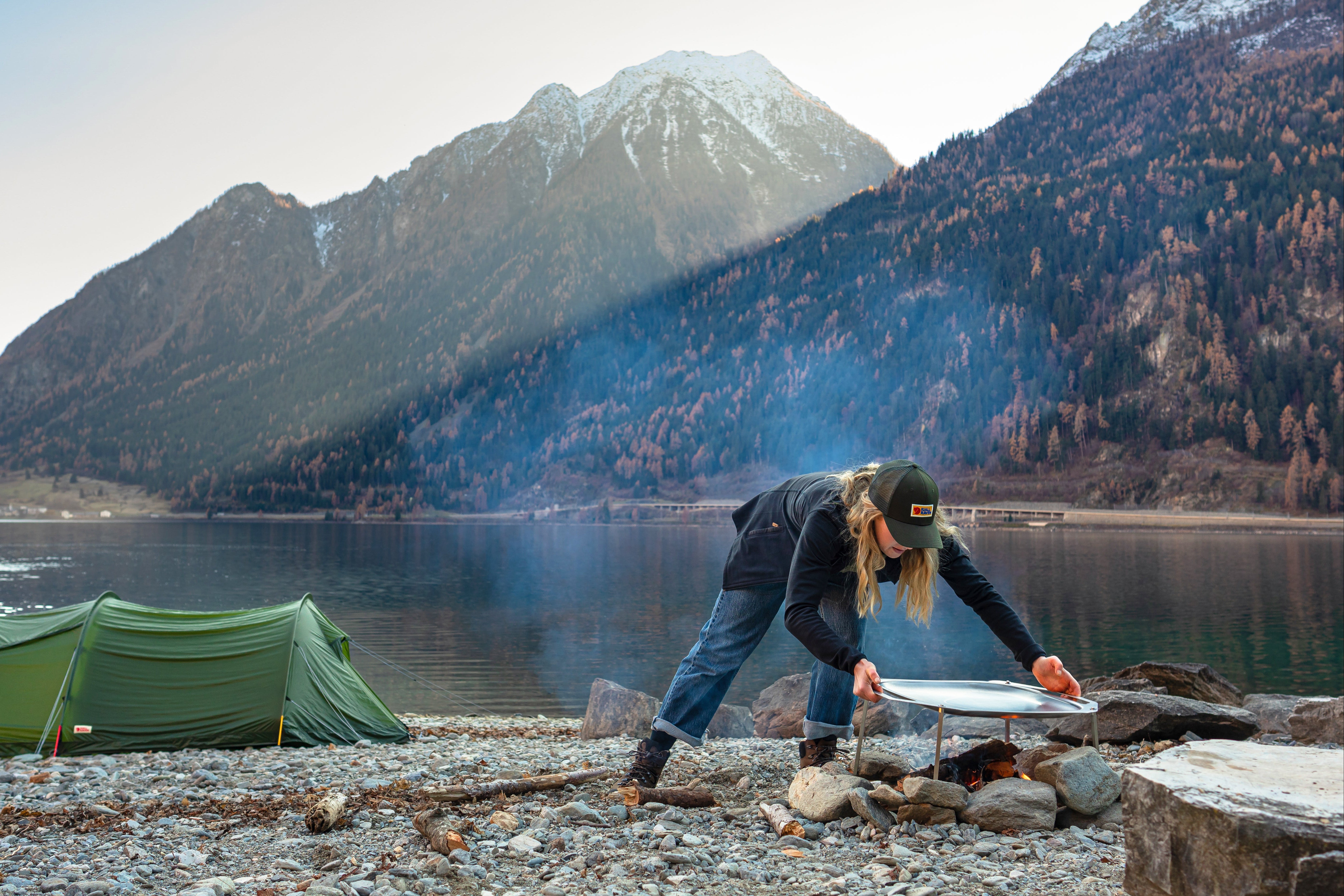
A practical alternative is a portable fire pit such as the Kamoto OpenFire Pit. It protects the ground from heat and ash, allowing you to enjoy a campfire in the woods while leaving minimal impact.
BUY KAMOTOPreparing fuel and tinder for your fire
A good fire starts with preparation. Collect firewood and kindling well before dark, as finding suitable material becomes harder in low light. You’ll almost always need more than you think, so gather extra.
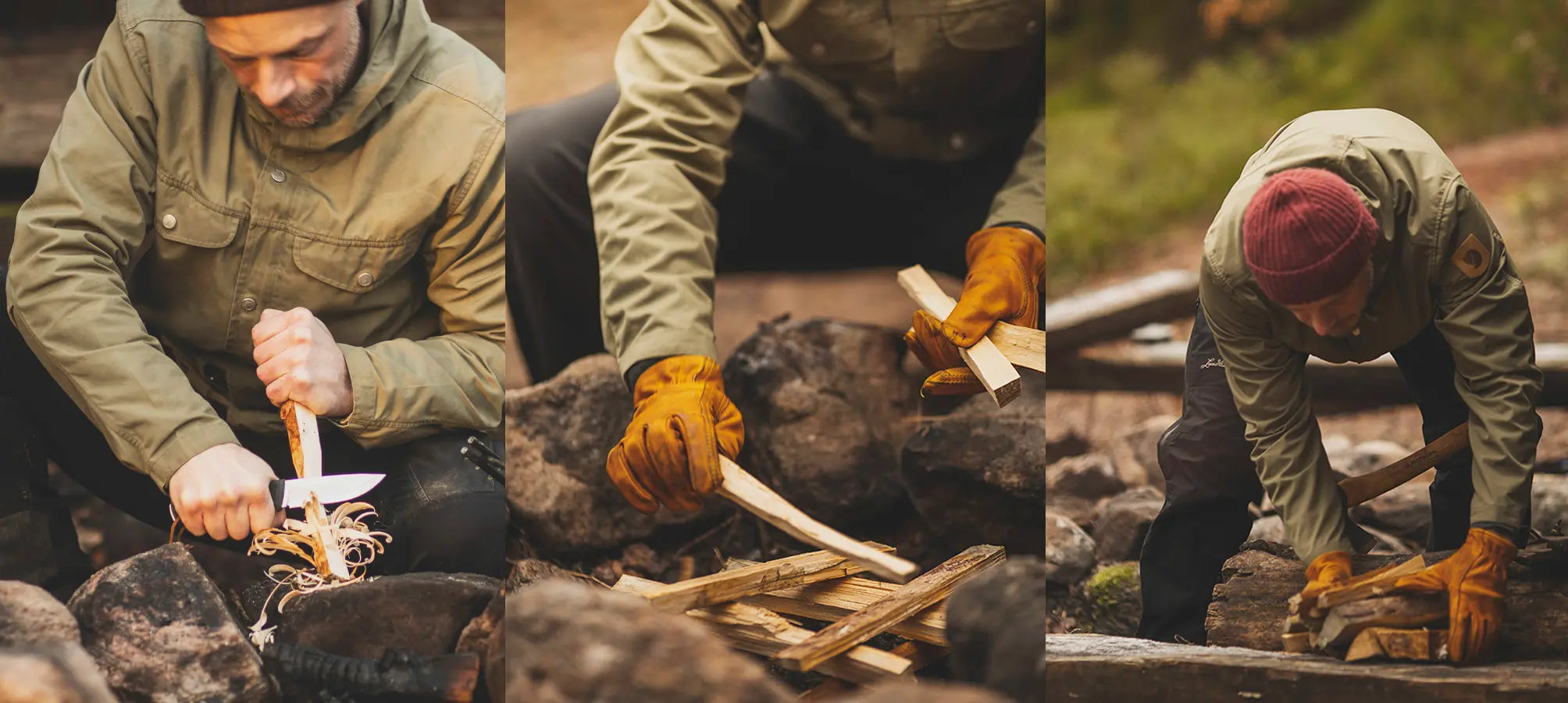
Dry wood is essential. Trying to make a fire with damp wood leads to smoke and frustration. A simple test is to knock two pieces together – dry wood gives a sharp sound, while wet wood sounds dull. If the outside is damp, split the wood to access the dry inner core.
Best types of wood for campfires
In UK and northern European woodlands, birch, pine and spruce are commonly used. Birch lights easily and produces good embers, spruce burns fast and hot, and resin-rich pine is excellent for kindling and fire starting.
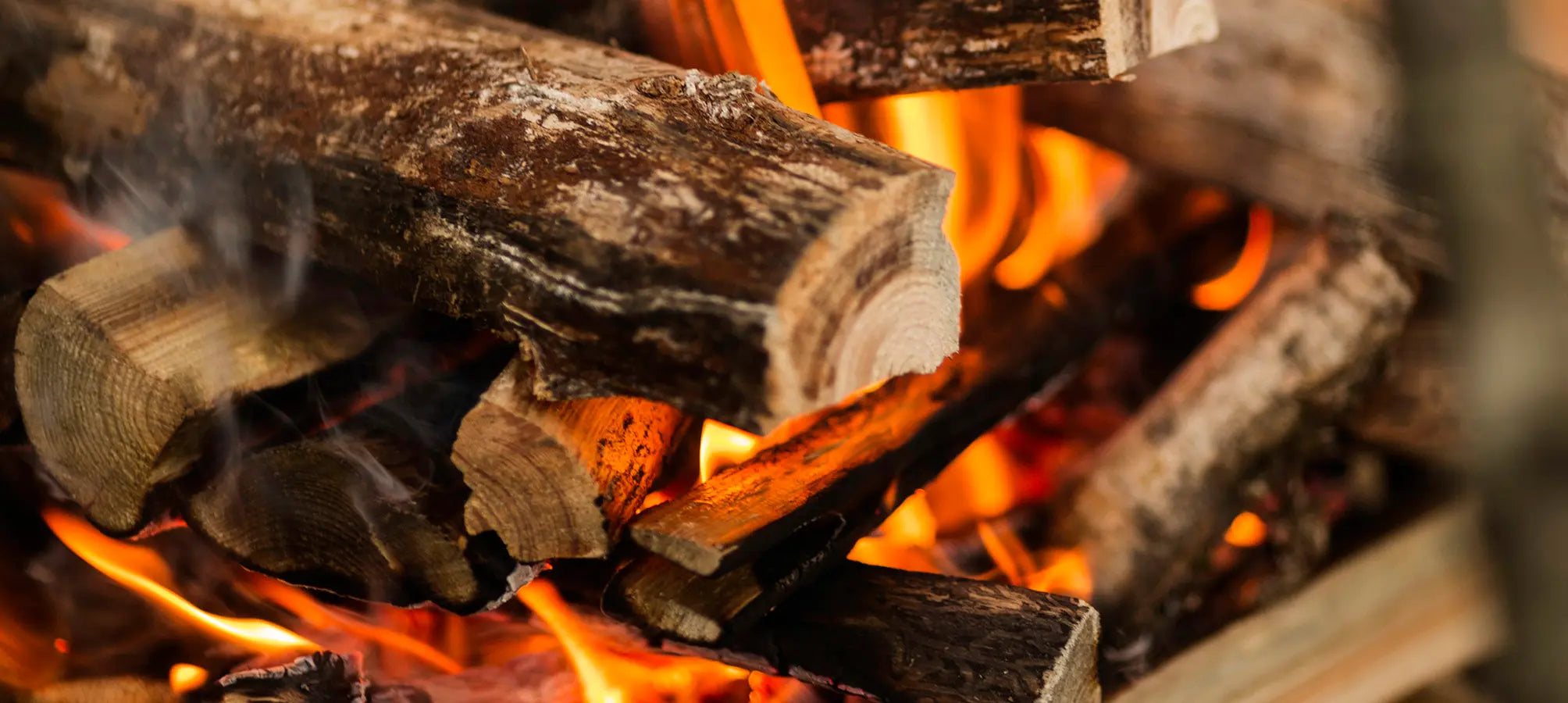
How to start a fire – step by step
Every fire depends on the fire triangle: heat, oxygen and fuel.

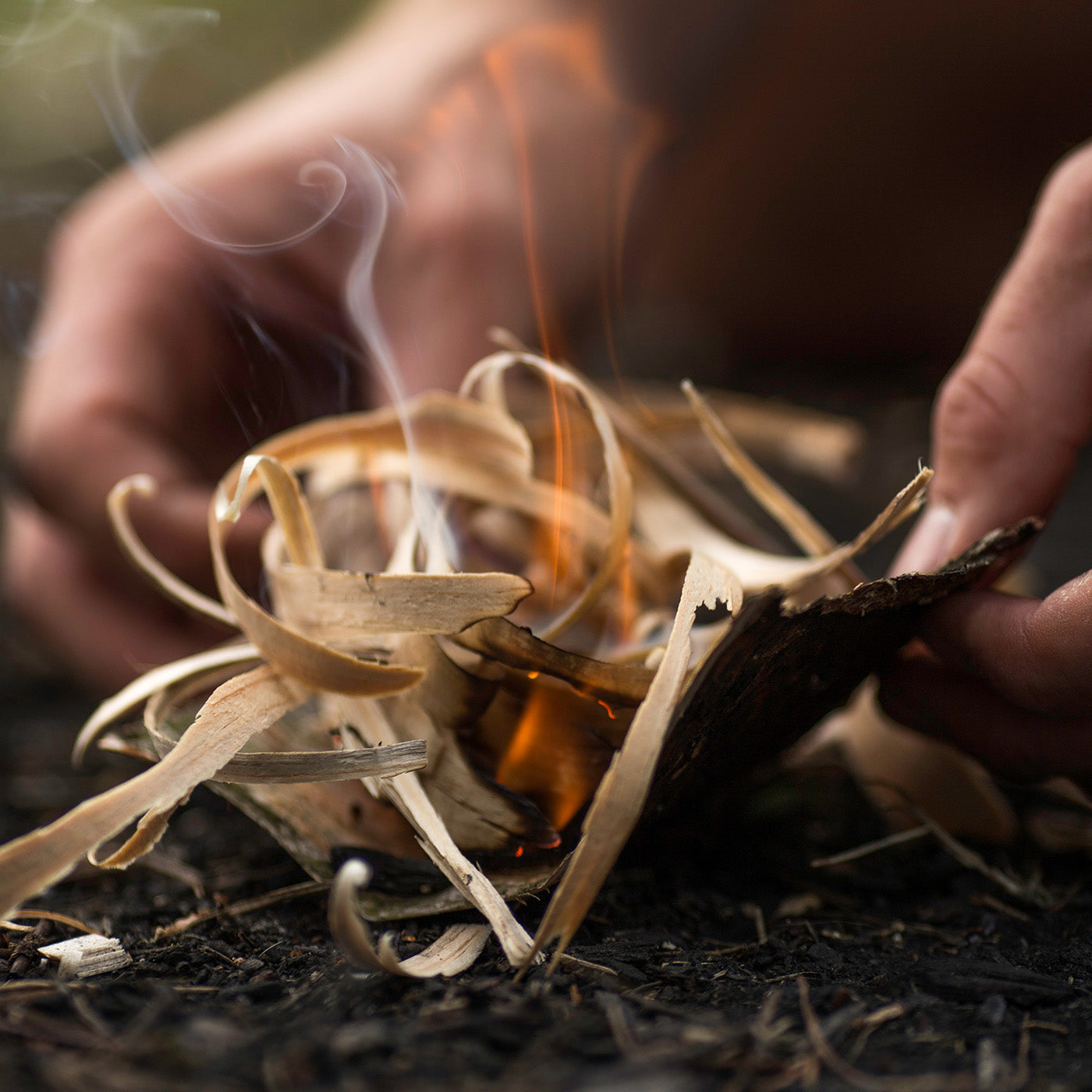
Tinder is material that ignites quickly. Birch bark, dry grass, cotton wool or commercial fire starters work well. In windy conditions, build a simple windbreak using stones or your rucksack to protect the flame.
A fire steel is one of the most reliable ways to create sparks. Matches can fail in wind and moisture, and lighters work poorly in cold conditions. Stormproof matches or windproof lighters perform better, but a fire steel remains the most dependable option.
Once the tinder is glowing, gradually add small sticks and twigs. Carving feather sticks with a knife creates thin shavings that catch fire easily and help the flames grow.
Start with small logs and build up gradually. For a quick ember bed for cooking, use several smaller pieces rather than a few thick logs. If you want long-lasting warmth, add larger logs once the fire is established.
Fire making with sticks and friction
Many people are curious about fire making with sticks, using friction to create heat and embers. This can be done with a hand drill or a bow drill fire, where a simple bow and cord help spin the spindle faster and more efficiently.
These methods work, but they require patience, skill and plenty of practice. For most people, friction fire starting is best treated as a learning exercise rather than a reliable way to start a fire outdoors. Valuable knowledge to have – but not something to rely on in cold or wet conditions.
THE MOST RELIABLE WAY TO MAKE A FIRE
FIRE STEEL
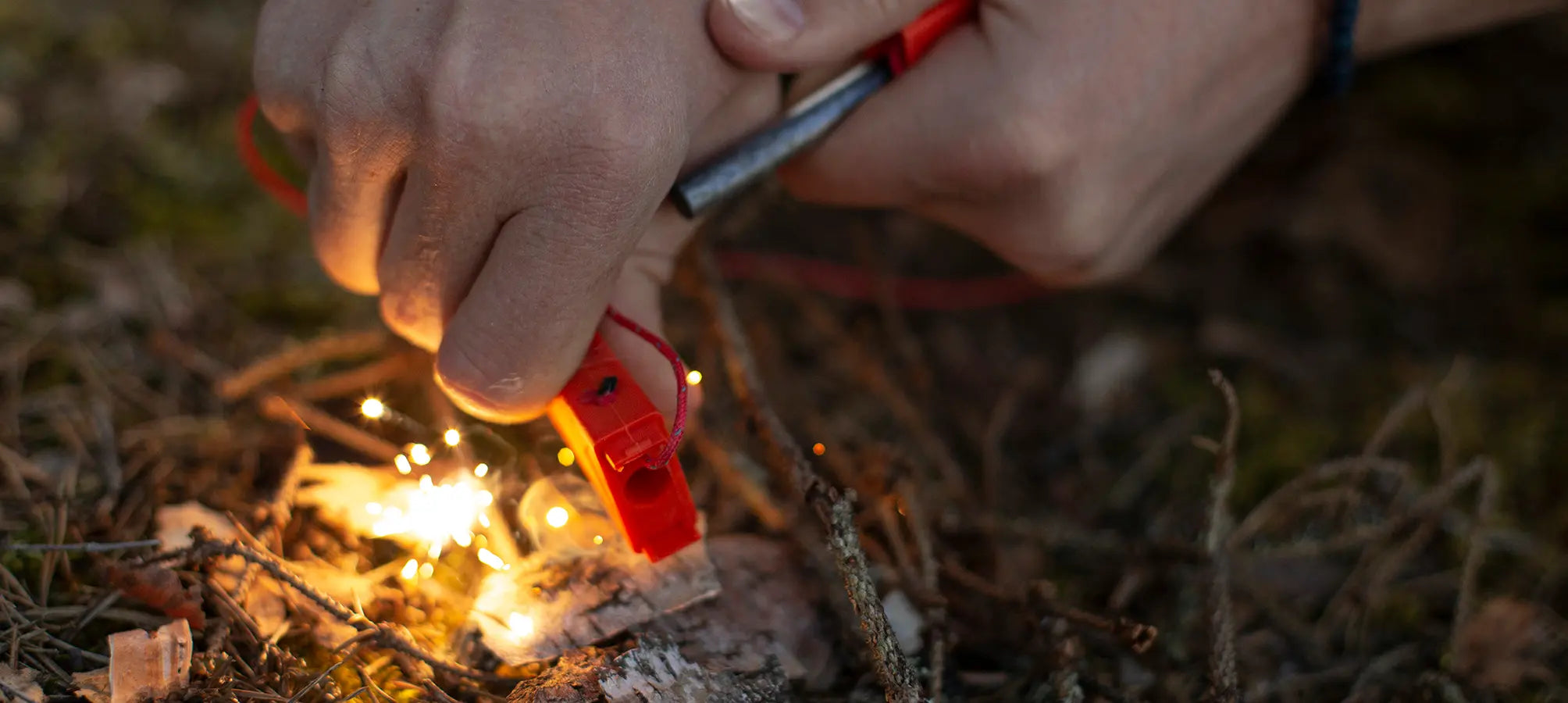
If you want a dependable way to start a fire in all conditions, a fire steel, or ferro rod, is hard to beat. It works in rain, snow and strong wind, performs well in cold temperatures and can be used thousands of times.
With the Primus Ignition Steel, you always have a reliable fire-starting tool close at hand. Its protective biobased sheath keeps the steel dry and ready in your pack.
How to use a fire steel – step by step
1. Place your tinder on the ground, such as birch bark or cotton.
2. Brace the fire steel against the ground close to the tinder.
3. Pull the striker or the back of a knife firmly down the steel.
4. Direct the sparks into the tinder until it starts to glow, then gently add twigs until the fire catches.
Practise at home before heading out. Once the technique becomes familiar, using a fire steel is both safe and satisfying.
Different ways to build your fire
The way you build your fire affects how it burns:
- Teepee fire: A classic structure with sticks leaning together. Easy to light and ideal as a campfire.
- Log cabin fire: Built like a small timber frame. Stable, good airflow and excellent for cooking.
- Hunter’s fire: Two logs placed parallel with a small fire between them. Sheltered from wind and well suited for cooking.
- Long fire: Two large logs stacked with spacers. Burns for a long time and provides steady heat.
- Blowtorch fire: A small, intense fire directed by the wind. Quick to light but hard to control – best kept as an emergency option.
- Brush fire: Made from twigs and small branches. Produces quick light and heat but burns fast and needs frequent feeding.
Practical fire safety tips
Even a small fire deserves respect. Always keep water nearby – a bucket works well, and collapsible fabric or plastic versions are easy to pack.
When you’re finished, extinguish the fire completely. Pour on plenty of water, stir the ashes and check that everything is cool. A good rule is that you should be able to place your hand on the ground where the fire burned. Restore the site so no trace remains.
MAKING A FIRE FOR OUTDOOR COOKING
PRIMUS BACKPACKING STOVES
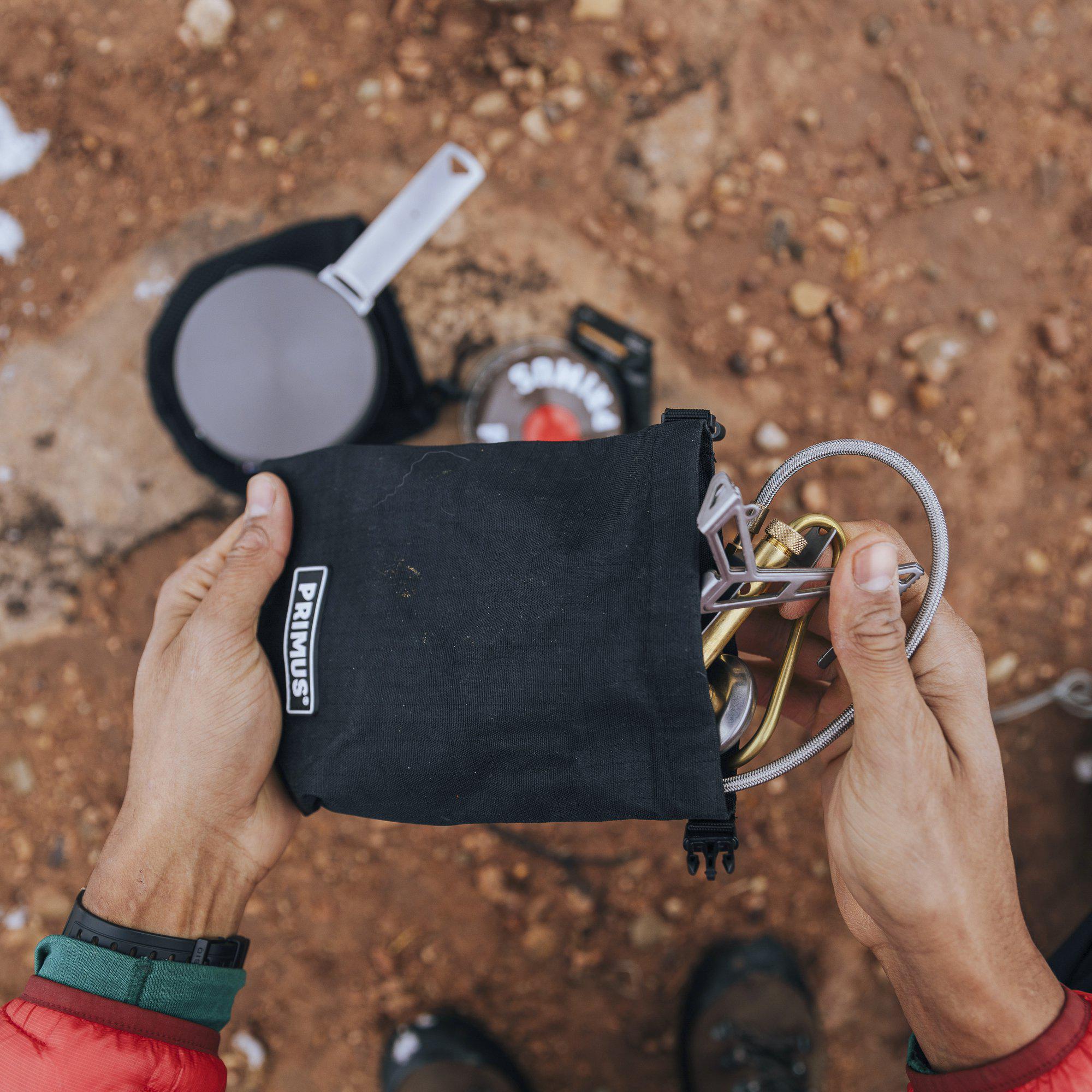
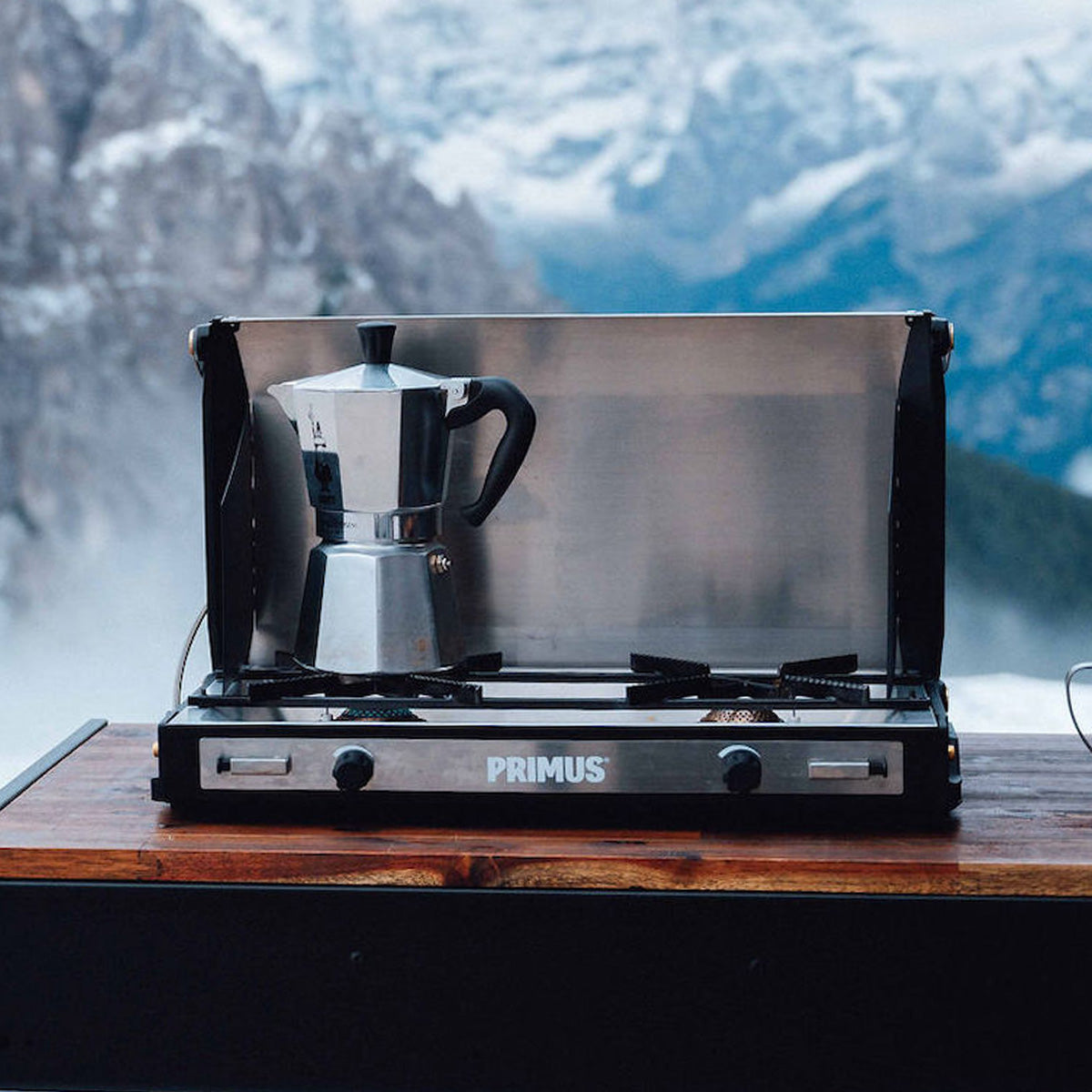
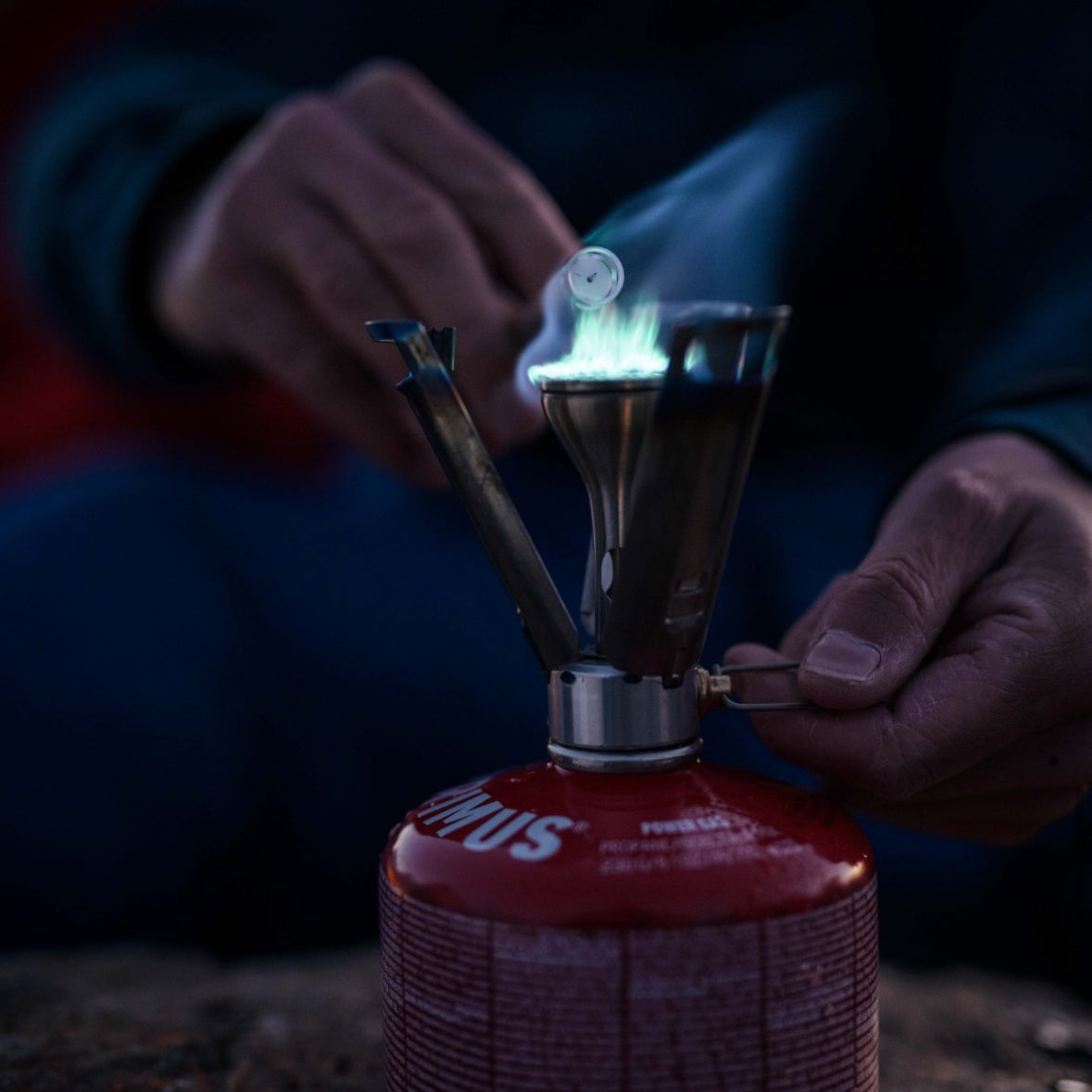
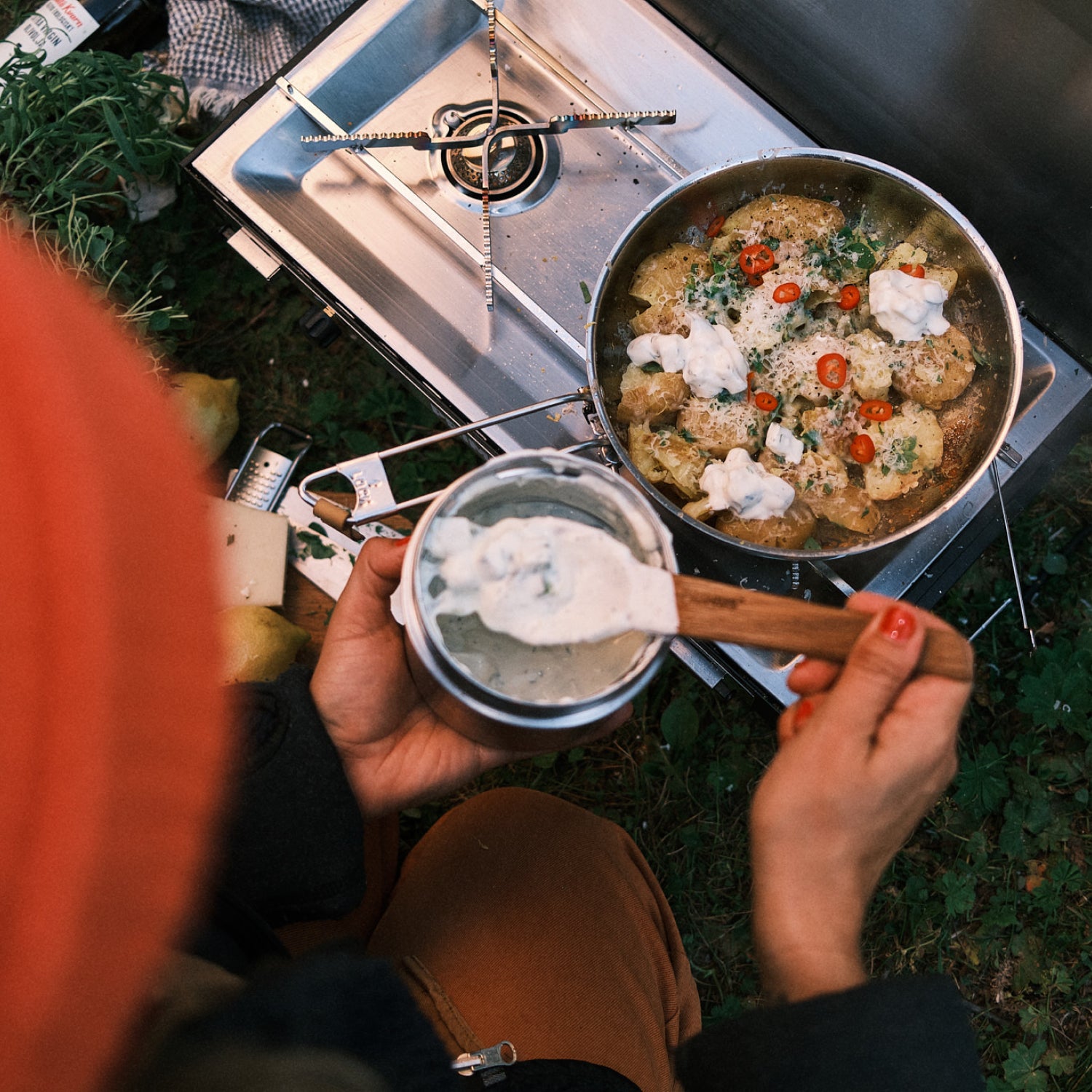
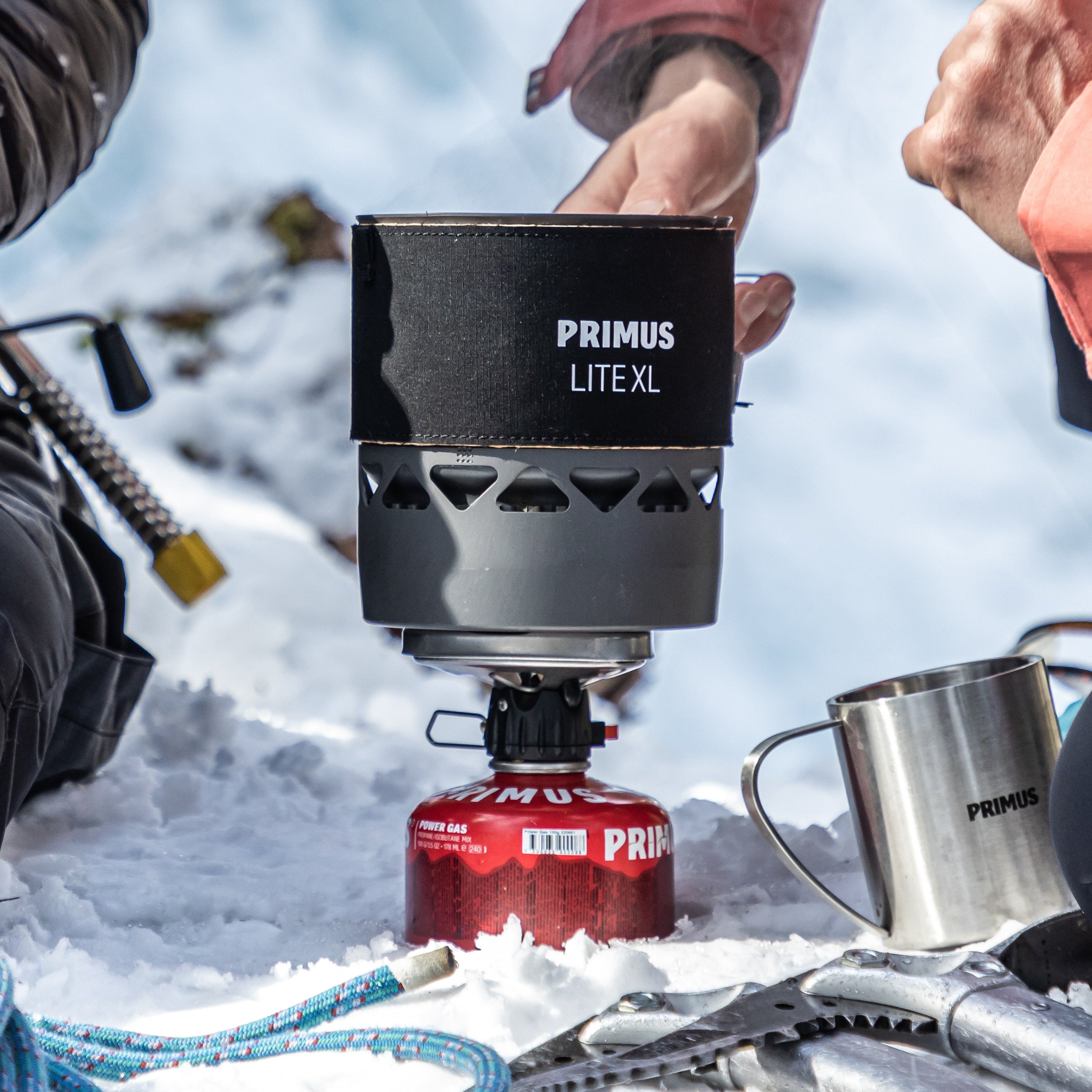
A glowing campfire is perfect for bread on a stick, marshmallows or sausages. But sometimes you need a solution that works regardless of weather or fire restrictions. That’s where a camping stove becomes a smart complement.
Primus backpacking stoves are compact, reliable and efficient, providing hot food even when wood is wet or open fires aren’t allowed. In exposed conditions, a stove often makes the difference between a cold evening and a warm, comforting meal.
Knowing how to make a fire in the woods is as much about respect for nature as it is about technique. Practise using a fire steel, keep a simple fire kit close at hand, and always make sure the fire is fully extinguished before you leave. Done right, a fire becomes more than warmth and light – it becomes a safe and rewarding part of outdoor life.
Want to make firemaking even easier?
Explore our range of fire pits and fire-starting equipment.
Are you in the right place
Please select your store